 The average American family tosses nearly $1,500 worth of food into the trash each year—money that could’ve stayed in your pocket. Most households forget what’s hiding in the back of the refrigerator, buy duplicate groceries, and watch fresh produce wilt before it gets used. The culprit isn’t carelessness; it’s the invisible nature of food waste that happens when life gets busy.
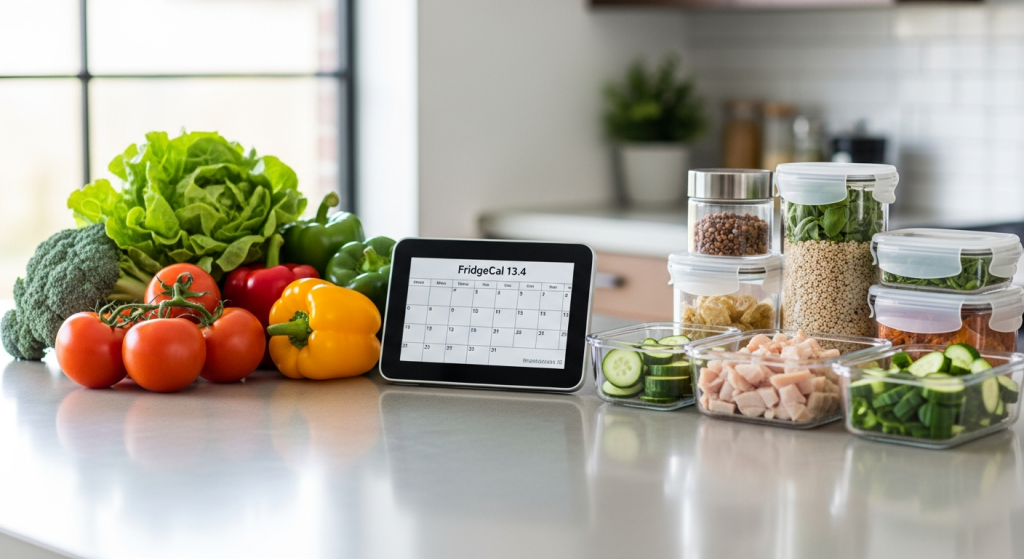
The Everblog 13.4″ FridgeCal™ Smart AI Calendar has earned its reputation as the world’s #1 AI fridge calendar by solving a problem that plagues busy households: the organized chaos of not knowing what you have. Powered by FridgeMind AI, an intelligent system designed to track groceries, alert you to expiration dates, and help you plan meals around what you already own, this device operates completely subscription-free. The technology works quietly in the background, preventing the waste that typically erodes both your budget and your peace of mind.
Discover how the FridgeCal™ can transform your kitchen efficiency today.
How FridgeMind AI Transforms Your Kitchen Into a Waste-Prevention System
FridgeMind AI operates as your kitchen’s quiet assistant, tracking every item you store and alerting you before spoilage happens. The system works through intelligent inventory logging—you scan or manually enter groceries as they arrive, organizing them by shelf and category. This creates a real-time map of your refrigerator’s contents.
The expiration alert feature sends notifications to your phone before food goes bad. Rather than discovering a forgotten container three weeks later, you’ll receive a nudge that your milk expires tomorrow or your vegetables are approaching their peak. This simple mechanism prevents the cascade of waste that typically occurs in busy households.
Remote fridge access through the companion mobile app becomes especially valuable while shopping. You check your phone before grabbing milk or lettuce, eliminating the duplicate purchases that plague grocery trips. No more standing in the produce aisle wondering if you already have tomatoes at home.
The AI learns your shopping patterns and suggests meal plans based on items nearing expiration. If you have chicken, broccoli, and rice approaching their best dates, the system recommends recipes that use these ingredients. This transforms inventory management from a chore into an intuitive process that saves both time and money.
The Real Numbers: Calculating Your Annual Food Waste Savings
The baseline is stark: the average household wastes $1,500 annually on spoiled food. For families with children or irregular meal schedules, this figure climbs higher. The question isn’t whether you’re wasting food—you are. The question is how much you’re willing to reclaim.
FridgeCal™ users typically reduce food waste by 20-40% within their first few months of use. For a family currently throwing away $1,500 per year, this translates to $300-$600 in recovered savings annually. The math becomes compelling when you examine the investment: the FridgeCal™ costs $249 on sale (regular price $409).
Break-even happens quickly. A family reducing waste by just 20% recovers the $249 investment in approximately five months. By month twelve, you’ve reclaimed $300 in food costs while gaining organizational peace of mind. Families with larger waste patterns reach profitability even faster—some break even within three months.
The subscription-free model amplifies these returns over time. Unlike meal planning apps or smart home systems that charge monthly fees, the FridgeCal™ delivers all features after the initial purchase. Year two, year five, year ten—your savings compound while costs remain zero. This creates genuine long-term ROI that traditional kitchen tools cannot match.
The environmental impact deserves equal attention. Every pound of food waste that reaches a landfill contributes to methane emissions. By preventing 20-40% of your household’s food waste, you’re directly reducing your family’s carbon footprint. For environmentally conscious households, this environmental dividend pairs with financial savings.
Start saving money and reducing waste with the FridgeCal™ Smart AI Calendar.
Smart Meal Planning & Grocery List Generation Features
The weekly meal planner syncs directly with your current fridge inventory. Rather than planning meals in isolation, you see what ingredients you already own. This fundamental shift prevents the disconnect between meal planning and actual grocery availability.
Automatic grocery list generation emerges from meal selections. Choose your recipes for the week, and the system builds a shopping list containing only items you lack. You avoid buying duplicates and walk away with a focused list that reflects actual household needs.
Recipe organization by available ingredients offers another layer of efficiency. Browsing “meals I can make right now” reveals options you hadn’t considered simply because you lost track of what you owned. A forgotten package of pasta suddenly becomes part of dinner instead of waste.
Dietary preferences and restrictions integrate into the meal planning process. Vegetarian family members, nut allergies, or low-sodium requirements filter recommendations automatically. The system creates a personalized meal plan that works for your household’s specific needs rather than generic suggestions.
The time-saving benefit appears immediately on weeknight evenings. Instead of standing in front of the open refrigerator wondering what to cook, you have curated meal options matched to your ingredients. Fifteen minutes of weekly planning replaces nightly confusion and prevents the takeout orders born from dinner-time stress.
Food waste prevention through meal planning creates the system’s most elegant feature. You organize recipes around what you own rather than what you wish you had. Vegetables nearing their expiration window guide your meal selections. This virtuous cycle means fewer trips to the trash and better use of every purchase.
Calendar Sync & Family Coordination Beyond the Kitchen
The FridgeCal™ integrates seamlessly with Google Calendar, Outlook, and iCal platforms. Your family’s existing calendar ecosystem remains intact while gaining access to a shared, visible hub. Doctor appointments, soccer practices, work meetings, and family events all appear on the same display.
Member Color Coding assigns unique colors to each family member. At a glance, you see whose tasks are whose and track responsibilities across the household. This visual clarity reduces confusion and creates accountability without constant verbal reminders.
Shared visibility of schedules, appointments, and activities in one location addresses the mental load that typically falls on one household member. When everyone sees the calendar, the burden of remembering transfers from an individual to a visible system. The stress of “Did I tell everyone about the dentist appointment?” evaporates.
The Chore Chart transforms task management through gamification. Children earn rewards for completing responsibilities, creating engagement rather than resentment. Progress tracking shows accomplishments visually, motivating continued participation. Household responsibilities become a collaborative game rather than a source of conflict.
This coordination extends beyond food management into the broader ecosystem of family life. The device becomes the central command center for your household’s operations—the single source of truth for who needs to be where and what requires attention.
Setup, Display Quality & Practical Considerations
The 13.4-inch touchscreen display offers clear visibility from across your kitchen. Text remains readable at distance, and the interface responds intuitively to touch input. The screen size strikes a balance between visibility and kitchen counter real estate—substantial enough to matter without overwhelming smaller kitchens.
The powerful magnetic mount secures firmly to refrigerator doors, handling the weight without slipping. The placement keeps frequently accessed information where you naturally look while cooking and meal planning. No additional installation is required; simply mount and connect to Wi-Fi.
The portable design with 8400mAh rechargeable battery means the device isn’t permanently tethered to your refrigerator. You can move it to the kitchen counter during meal prep or carry it to the dining room for family coordination discussions. Type-C charging connects to the same cables powering most modern devices.
Wi-Fi connectivity requirements mean placement near your router matters. Most kitchens receive adequate signal, but distance and interference can affect reliability. Consider your router location when deciding on mounting position.
The customized Android operating system provides essential features while limiting access to the broader Google Play Store ecosystem. You won’t install arbitrary apps, but core functionality remains fully accessible. This focused approach supports the device’s primary purpose rather than encouraging endless app scrolling.
Initial setup walks non-tech-savvy family members through the process systematically. Connecting to Wi-Fi, syncing calendars, and logging initial groceries are straightforward steps. Most households complete setup in under thirty minutes.
Battery Life, Syncing Reliability & Known Limitations
Battery performance during continuous use varies based on screen brightness settings. Keeping the display always-on at full brightness drains the battery faster than intermittent use. Most households find the battery adequate for typical daily access patterns, though continuous operation may require daily charging.
Occasional syncing issues have been reported with multiple calendar platforms. When managing complex calendar ecosystems with multiple accounts, synchronization sometimes lags. These situations remain exceptions rather than common occurrences, but households with intricate scheduling systems should test before committing fully.
The device can appear offline when entering deep sleep mode, creating a frustration point for users expecting 24/7 remote access. The workaround involves maintaining a low-brightness always-on setting rather than allowing full sleep cycles. This solution works but requires consciousness about energy management.
Battery life comparison to standard tablets shows the FridgeCal™ performing respectably for its use case. It’s not designed for all-day active use like an iPad; rather, it handles intermittent checks and always-on display scenarios where tablets would drain quickly.
These limitations matter most for households relying on remote access during shopping trips or requiring flawless multi-calendar synchronization. For families using the device primarily as a visible, in-home information hub, limitations rarely surface.
Why Environmentally Conscious Families Choose the FridgeCal™
Sustainability-focused households recognize that food waste represents embedded environmental damage. The resources used to grow, transport, and refrigerate wasted food create carbon costs without any benefit. Preventing spoilage eliminates this waste directly.
The measurable environmental impact becomes concrete when examined at household scale. Every pound of food preserved equals water conserved, transportation emissions avoided, and landfill methane prevented. Reducing household food waste by 30% creates meaningful environmental reduction.
The subscription-free model itself carries environmental benefit. No recurring digital subscriptions mean lower server infrastructure demands and reduced data center energy consumption. The single-purchase model aligns with conscious consumption principles by eliminating unnecessary ongoing resource usage.
Reducing food waste contributes directly to household carbon footprint reduction. Environmental calculators demonstrate that preventing food waste ranks among the most impactful individual actions for lowering carbon emissions. The FridgeCal™ makes this action simple and automatic.
Long-term environmental benefits compound annually. Year after year, your household prevents hundreds of pounds of food from reaching landfills. Over the device’s lifespan, this accumulates into meaningful environmental contribution. For families whose values prioritize planetary health, this becomes a powerful motivation.
Making the Decision: Is the FridgeCal™ Right for Your Family?
Ideal households for the FridgeCal™ share common characteristics: multiple family members with overlapping schedules, regular grocery shopping patterns, current food waste patterns above $1,000 annually, and a desire for centralized household coordination. Families with children particularly benefit from the gamified chore system and shared visibility.
Comparison to traditional methods reveals the limitations of paper calendars and sticky notes. A physical grocery list on paper provides no expiration alerts or remote access. Mental tracking of refrigerator contents requires extraordinary memory and attention. The FridgeCal™ automates what these traditional systems struggle to accomplish.
Alternative smart display solutions exist, but few combine fridge inventory tracking with calendar synchronization and chore management. Standalone apps handle some functions but lack the physical presence and visual reminder that a wall-mounted display provides. The integrated approach distinguishes FridgeCal™ from partial solutions.
Before purchasing, consider these questions: How much food does your household currently waste monthly? Does your family struggle with schedule coordination and communication? Would shared calendar visibility reduce household stress? Do you shop frequently enough to benefit from inventory tracking? These answers guide whether the investment aligns with your household’s actual needs.
Warranty and return policies provide purchase confidence. Everblog backs the FridgeCal™ with protection that covers manufacturing defects and typical use scenarios. Return policies allow trial periods where you can assess real-world performance in your kitchen before final commitment.
Current pricing places the device at $249 on sale from $409 regular price. Sales and promotions appear seasonally, so monitoring pricing helps identify optimal purchase windows. The investment becomes increasingly attractive as food waste baseline increases—larger families wasting more food recover investment faster.
Transform Your Kitchen Efficiency & Reclaim Your Food Budget
The Everblog 13.4″ FridgeCal™ Smart AI Calendar operates on a straightforward premise: when you know what you have, you stop wasting it. The FridgeMind AI inventory system, combined with intelligent meal planning and family coordination tools, creates a ripple effect that extends far beyond your refrigerator. You’ll spend less on groceries, throw away less food, and gain back mental energy you’ve been spending on household logistics.
At $249 on sale, you’re looking at a device that pays for itself within months if your family currently wastes $1,500+ annually on spoiled food. The subscription-free model means your savings only grow with time—there’s no recurring fee eroding your ROI. For families with children, the gamified chore system and color-coded task management add organizational value that extends well beyond food waste prevention.
If your household struggles with food waste, forgets what’s in the fridge, or drowns in the mental load of family coordination, the FridgeCal™ deserves serious consideration. Start by tracking how much food you currently throw away each month—chances are, this smart calendar will pay for itself faster than you expect.
Transform your kitchen and reclaim your food budget with the FridgeCal™ today.