
Imagine never worrying about power outages again—or better yet, cutting the cord entirely from the grid. Over 40% of homeowners are seriously considering off-grid solutions, yet most feel overwhelmed by technical requirements.
Modern portable power stations have transformed what was once complex and expensive into something achievable for everyday families.
The EcoFlow DELTA Pro 3 has emerged as a game-changer, specifically engineered to bridge the gap between traditional home power systems and portable energy solutions.
This system doesn’t require compromises between capacity, output, and expandability—three elements that typically demand tough tradeoffs in the portable power market.
Explore the EcoFlow DELTA Pro 3 and start your journey toward energy independence today.
What Is the EcoFlow DELTA Pro 3?
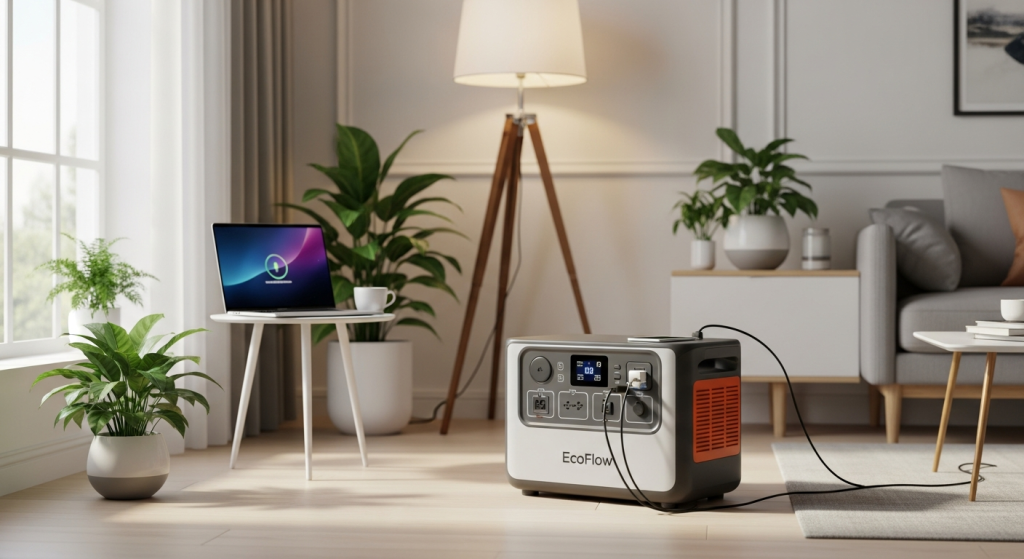
The EcoFlow DELTA Pro 3 is a high-capacity portable power station designed for applications ranging from home backup to RV travel and off-grid electricity.
At its core is a 4,096Wh (approximately 4kWh) LFP battery. The unit delivers up to 4,000W of continuous AC output, while its surge output reaches 8,000W. EcoFlow also lists X-Boost support for compatible appliances requiring up to 6,000W.
Those numbers make the DELTA Pro 3 considerably more capable than a small camping power station. Depending on appliance requirements, it can support everything from lights and laptops to refrigerators, cooking equipment, tools, and other relatively demanding devices.
For longer stays away from the grid, its capacity can also be expanded. A single DELTA Pro 3 supports up to two compatible Smart Extra Batteries, increasing storage from roughly 4kWh to 12kWh.
Why the EcoFlow DELTA Pro 3 Makes Sense for Off-Grid Living
The biggest challenge of off-grid living is straightforward: you have to produce and store enough electricity to match your consumption.
A traditional setup can require separate batteries, an inverter, charge controllers, monitoring hardware, extensive wiring, and professional installation. Portable power stations simplify much of that infrastructure by combining several important components into one system.
The DELTA Pro 3 takes this approach while providing enough capacity and output for significantly more ambitious off-grid applications.
1. Large 4,096Wh Battery Capacity
Battery storage determines how long your appliances can keep running after sunset or during periods of poor solar production.
With 4,096Wh of rated capacity, the DELTA Pro 3 provides a substantial starting point for an off-grid setup.
Real-world runtime will depend on appliance consumption, inverter losses, environmental conditions, and other factors. Still, a battery of this size can make it practical to prioritize essential loads such as:
- Refrigerators and freezers
- LED lighting
- Wi-Fi and communications equipment
- Laptops and monitors
- Fans
- TVs and entertainment devices
- Small kitchen appliances
- Water pumps
- Power tools
- Mobile devices
The trick to successful off-grid living isn’t simply owning a huge battery. It is matching your stored energy to the devices you actually need.
2. Up to 4,000W AC Output for High-Power Appliances
Many smaller portable power stations are perfectly adequate for phones and laptops but struggle once refrigerators, pumps, cooking appliances, or power tools enter the picture.
The EcoFlow DELTA Pro 3 offers 4,000W maximum continuous AC output and an 8,000W surge rating.
That gives an off-grid system much more flexibility.
Instead of designing your entire lifestyle around ultra-low-power electronics, you can potentially operate many of the appliances you would normally use at home—provided their individual and combined power requirements remain within the system’s limits.
For cabins and remote homes in particular, that can make the transition to off-grid living considerably easier.
3. Solar Charging Makes Long-Term Off-Grid Living Possible
A large battery is useful, but an off-grid battery eventually becomes an empty battery unless you have a reliable way to recharge it.
That’s where solar becomes essential.
The DELTA Pro 3 supports up to 2,600W of solar input across two PV inputs:
- High-PV input: up to 1,600W
- Low-PV input: up to 1,000W
With a properly sized solar array and suitable weather, this creates the foundation for a renewable off-grid energy cycle:
Solar panels → DELTA Pro 3 → appliances → solar recharge
During daylight hours, your panels collect energy. Some of that energy can support your current consumption while available power replenishes battery storage for use later.
Actual solar generation will naturally vary according to panel capacity, orientation, shading, location, season, temperature, and weather.
That’s why anyone planning serious off-grid living should calculate daily energy consumption and expected solar production rather than simply buying the largest panel array possible.
4. Expandable Storage for Longer Off-Grid Stays
A 4kWh battery may be plenty for one person’s essential electronics but insufficient for a household running appliances around the clock.
The DELTA Pro 3 addresses this through expandable storage.
A single unit can be expanded to approximately:
4kWh → 8kWh → 12kWh
by adding compatible extra batteries.
This modular approach has a major advantage for people building an off-grid system gradually.
You can start with the DELTA Pro 3, monitor your actual consumption, and then decide whether additional battery capacity is necessary.
That is often smarter than trying to predict every future energy requirement before you’ve spent significant time living off-grid.
5. LFP Battery Chemistry for Long-Term Use
Off-grid batteries may go through frequent charge-and-discharge cycles, so battery longevity matters.
EcoFlow uses LFP (lithium iron phosphate) battery chemistry in the DELTA Pro 3 and rates the battery for 4,000 cycles before reaching 80% of its original capacity under its specified testing conditions.
That makes LFP particularly attractive for applications where the battery may be used regularly rather than sitting untouched until an occasional blackout.
The power station should still be installed and operated according to EcoFlow’s environmental and safety requirements.
6. Quiet Power for Cabins, RVs, and Remote Homes
One reason solar-plus-battery systems are appealing for off-grid living is noise—or rather, the lack of it.
Fuel generators can be extremely useful, but running one near a cabin or campsite introduces engine noise, exhaust, fuel storage, and maintenance.
EcoFlow says the DELTA Pro 3 can operate at around 30 dB under specified low-load conditions, making it suitable for environments where quiet operation matters.
That can make a noticeable difference when you’re sleeping, working remotely, or simply enjoying somewhere you deliberately chose because it was peaceful.
7. Smart Energy Monitoring Through the EcoFlow App
Off-grid living turns electricity from an invisible utility into something you actively manage.
You begin noticing questions you probably never considered while connected to the grid:
How much energy did the solar panels generate today?
How full is the battery?
Which devices are consuming the most electricity?
Should I run a high-power appliance now or wait until tomorrow’s solar production?
The EcoFlow app allows users to monitor information such as battery levels and input and output power while adjusting energy-management settings.
This kind of visibility can be extremely valuable because successful off-grid living is often less about producing unlimited electricity and more about using available energy intelligently.
Building an Off-Grid Solar Setup Around the DELTA Pro 3
Buying a portable power station is only one part of creating a dependable off-grid energy system.
A practical setup might include:
Solar panels → DELTA Pro 3 → Extra battery storage → Essential appliances
The right configuration depends heavily on your lifestyle.
Step 1: Calculate Your Daily Energy Consumption
Start by listing every electrical device you expect to use.
For example:
| Appliance | Power | Daily Use | Approx. Energy |
|---|---|---|---|
| Refrigerator | 100W average* | 10 hrs equivalent | 1,000Wh |
| Laptop | 60W | 5 hrs | 300Wh |
| LED lights | 40W | 5 hrs | 200Wh |
| Fan | 50W | 8 hrs | 400Wh |
| TV | 100W | 3 hrs | 300Wh |
| Misc. electronics | — | — | 300Wh |
| Estimated total | 2,500Wh/day |
*Illustrative figures only. Actual consumption varies considerably by appliance.
In this simplified example, the household consumes around 2.5kWh per day.
Knowing this number gives you a starting point for deciding how much battery capacity and solar generation you need.
Step 2: Size Your Solar Array
Next, determine how much solar energy you need to replace your daily consumption.
If you consume approximately 2.5kWh per day, your solar system needs to generate at least that amount—and ideally more—to account for conversion losses and days with weaker sunlight.
For permanent installations, verify electrical requirements carefully and use qualified professional assistance where required.
Step 3: Decide How Much Battery Reserve You Need
Next comes autonomy.
Ask yourself:
How many days do I want to survive with little or no solar generation?
Suppose your essential consumption is 2kWh per day.
A roughly 4kWh battery theoretically represents around two days of that load before accounting for system losses and reserve levels.
Increasing storage toward 8kWh or 12kWh can provide substantially more flexibility.
More storage is especially useful in locations with inconsistent sunlight or where electricity is critical for refrigeration, communications, pumps, or remote work.
Energy-Saving Tips for Off-Grid Living
Even with a powerful system like the DELTA Pro 3, efficiency remains one of the best ways to improve energy independence.
Choose efficient appliances whenever possible. An efficient refrigerator that runs continuously can save far more energy over time than obsessing about how often you charge your phone.
Schedule energy-intensive tasks for sunny periods. Running appliances while solar production is strong can reduce how deeply you discharge your battery overnight.
Eliminate unnecessary standby loads. Small amounts of continuous consumption can become surprisingly significant over 24 hours.
And monitor your system regularly. Once you understand your real consumption patterns, it becomes much easier to decide whether you need additional panels, another battery, or simply a few changes in daily habits.
EcoFlow DELTA Pro 3 for RV and Van Life
The DELTA Pro 3 can also make sense for people whose version of off-grid living has wheels.
Its battery capacity and multiple output options make it suitable for powering equipment commonly found in RV and mobile setups.
EcoFlow lists AC, USB-A, USB-C, DC5521, and Anderson outputs, while the unit also supports vehicle charging inputs.
There is one important consideration: weight.
At approximately 51.5kg (113.5 lb), the DELTA Pro 3 is transportable rather than lightweight.
Its design includes mobility features, but RV and van owners should account for the unit’s size and weight when planning storage and payload.
Is the EcoFlow DELTA Pro 3 Enough for Full-Time Off-Grid Living?
Potentially—but the answer depends entirely on your energy requirements.
For a small cabin, RV, tiny home, or highly efficient household, a DELTA Pro 3 combined with adequate solar generation could form the foundation of a capable off-grid system.
A household with electric water heating, large air conditioners, electric space heating, electric cooking, pumps, and numerous always-on devices will have much higher requirements.
In those situations, expandable batteries, more solar capacity, backup generation, or a larger integrated energy system may be appropriate.
The key principle is simple:
Pros and Considerations for Off-Grid Use
The EcoFlow DELTA Pro 3 offers several compelling advantages for energy-independent living.
Its 4,096Wh LFP battery, 4,000W continuous AC output, 2,600W solar input, expandable storage, app-based monitoring, and multiple charging options make it a highly versatile platform for cabins, RVs, remote properties, and backup applications.
There are considerations as well.
At more than 50kg, this isn’t something most people will casually carry around. Building a serious solar array and adding extra batteries also increases the overall investment. And, like every battery-based off-grid system, performance ultimately depends on having enough generation and storage for your actual consumption.
Those aren’t necessarily disadvantages—they’re simply factors that should be included when designing an off-grid system.
Should You Buy the EcoFlow DELTA Pro 3?
The EcoFlow DELTA Pro 3 is a strong choice if you need a high-capacity portable power station for home backup, RV trips, off-grid living, or emergencies.
Its combination of substantial power output, expandable capacity, and flexible charging options makes it capable of handling everything from everyday electronics to demanding household appliances.
That said, its size, weight, and premium price mean it may be more than you need for occasional camping or simply charging small devices. For those situations, a smaller and more affordable power station will likely make more sense.
Overall, the DELTA Pro 3 is best suited to buyers who value serious backup power, versatility, and room to expand their setup over time. If you expect to use those capabilities regularly, it can be a worthwhile long-term investment.